
WiRSA (Wisconsin Rural Schools Alliance) - Strong Schools - Strong Communities
It is Public Schools Week!

From February 23-27, 2026, Wisconsin celebrates Public Schools Week, a great time to acknowledge the vital role public schools play in strengthening our communities, supporting families, and preparing future leaders.
WiRSA recognizes and honors the commitment of the educators, administrators, and staff who serve students statewide. We also celebrate the daily classroom moments that foster learning, spark creativity, and create opportunities for students.
WiRSA would like to thank and recognize all the student teachers working hard to enter the great field of education. In addition, we want to highlight the recipients of WiRSA’s 2026 Student Teacher Scholarships.
Click Here to see all their bios
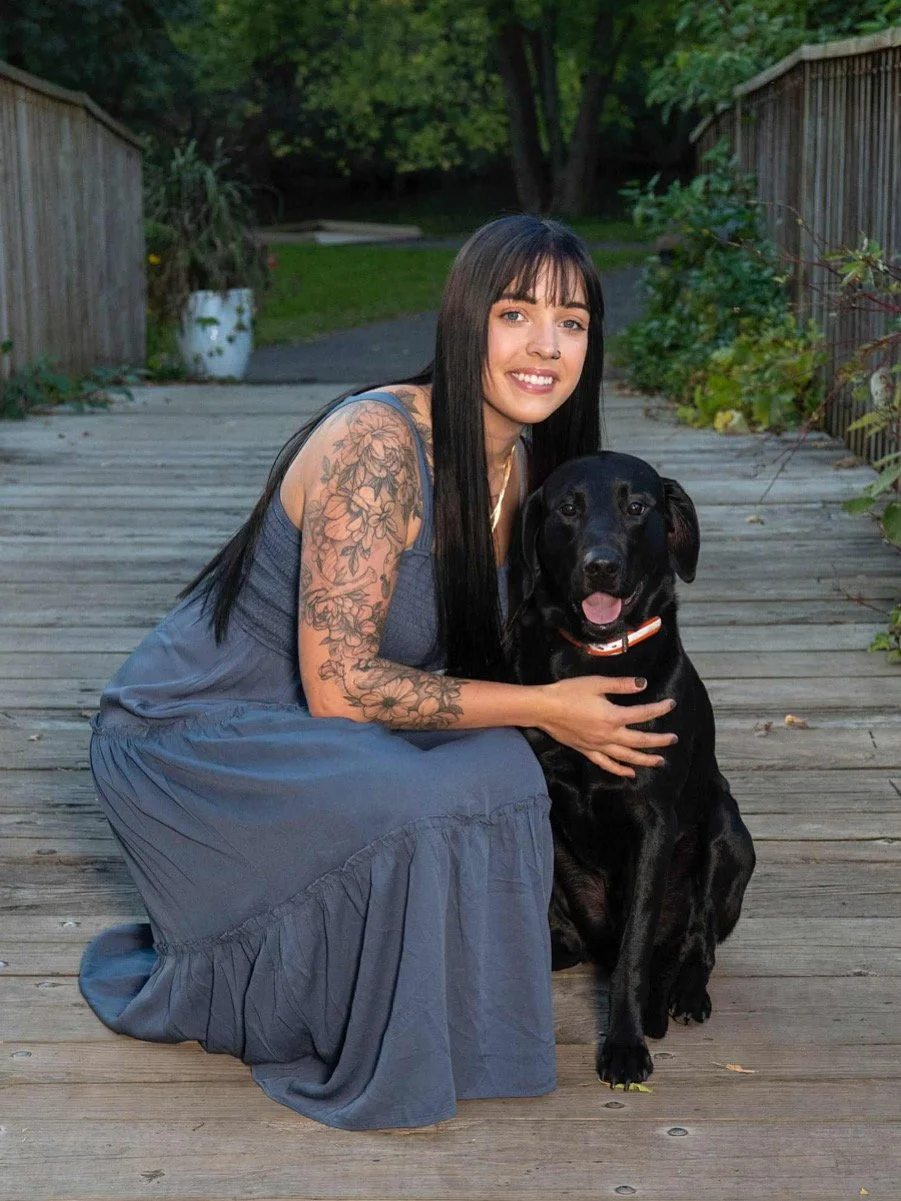
Brooklyn Tolzman
HS - Clear Lake
UW - Superior
Student Teaching in
St. Croix Falls

Faith Holler
HS - Prairie du Sac
UW-La Crosse
Student Teaching in Lodi
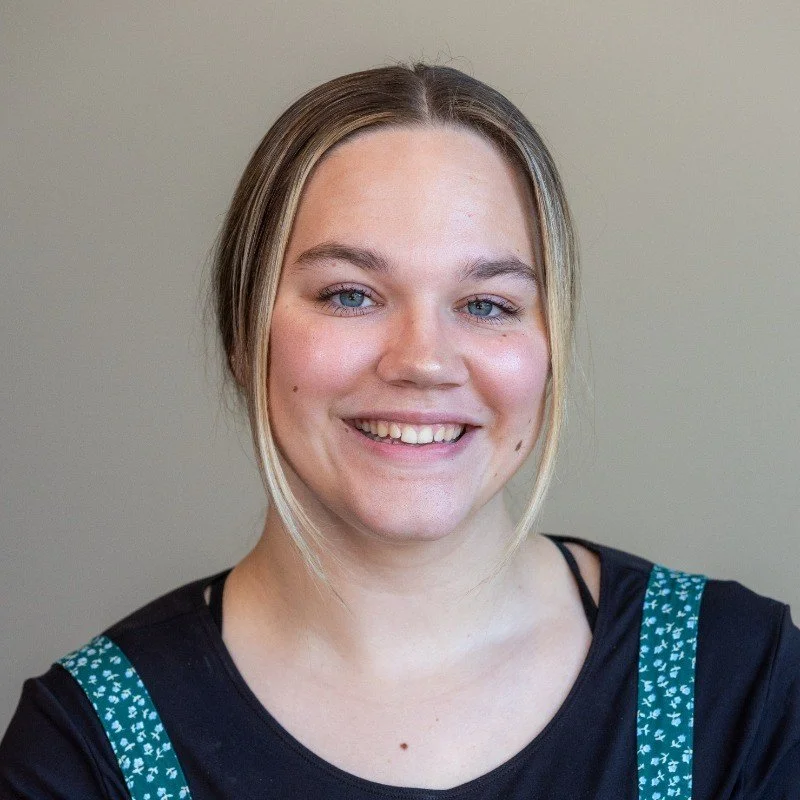
Leah Hammill
HS - Platteville
UW - Plateville
Student Teaching in
Cuba City

Riley O’Connell
HS - West Bend
UW - Stevens Point
Student Teaching in
Rhinelander
Lawsuit filed to fund public schools!

WPR - WISCONSIN TODAY - Parents, educators file lawsuit against Wisconsin lawmakers over school funding
WISCONSIN EXAMINER - Wisconsin school funding unconstitutional according to lawsuit filed by teachers, parents, students
WHEELER REPORT - LAWSUIT FILED TO FUND PUBLIC SCHOOLS
AP NEWS - Wisconsin schools, teachers file lawsuit against GOP-led Legislature seeking more funding
Senate PUBLIC HEARING Committee on Education The committee will hold a public hearing on the following items at the time specified below: Tuesday, March 3, 2026 9:00 AM 201 Southeast
These passed the Assembly last week
Senate Bill 887 Relating to: required subjects in a human growth and development instructional program.
Senate Bill 957 Relating to: policies to prohibit the use of wireless communication devices during the school day in public schools.
Senate Bill 972 Relating to: recommendations made by the council on early literacy curricula.
Senate Bill 1000 Relating to: prohibiting education employers from entering into certain agreements related to information about alleged immoral conduct by an employee and civil immunity for information provided to a prospective employer.
Senate Bill 452 Relating to: pupil eligibility for parental choice programs based upon participation by a sibling or a dependent child of the pupil's parent or guardian.
The Assembly has concluded its general floor work for the session.
The Senate's final scheduled session is on March 17th, the last opportunity to consider pending bills. Bills that have only passed the Senate cannot move forward, as the deadline for Assembly action has passed.
As the session wraps up, attention turns to education bills that have passed only a single chamber.
Potential for Further Action
Speaker Vos has been emphatic that he did not intend to extend the session beyond the scheduled February period. However, he informed media outlets that leadership continues to work on a tax proposal, and either a Special Session (called by the Governor) or an Extraordinary Session (called by the Legislature) remains possible if an agreement is reached.
Upcoming Legislative Dates
The Senate's final day of regular session is Tuesday, March 17.
The regular floor period officially ends on March 19.
Limited business session dates are available on April 14-16. A veto review session is scheduled for May 12-13.
The Senate has more than 180 bills that cleared the Assembly and can consider during the final floor period of the session next month.
Regarding Education-Related Bills
10 - Could be scheduled for the Senate floor without any additional committee action
5 - Received public hearings, but need approval for passage
6 - Consolidation bills have not had public hearings in the Senate
6 - Currently, no action
6- Approved by a Senate Committee for passage, and could be scheduled for the floor without any additional committee action
The Senate would have to pass these bills in the reserved March 17-19 floor period for them to get these to the governor’s desk.
Approved by a Senate Committee for passage in that chamber, and could be scheduled for the floor without any additional committee action.
AB 98: Pupils wearing traditional tribal regalia at a graduation ceremony or school-sponsored event.
AB 101: Requiring school districts to report information related to American Indian children attending school in the school district.
AB 109: A lifetime license that authorizes an individual to teach an American Indian language in an American Indian language program and modifying rules promulgated by the Department of Public Instruction.
AB 156: Requiring child sexual abuse prevention education.
AB 226: Prohibiting school boards and independent charter schools from providing ultra-processed foods in free or reduced-price meals.
AB 362: Requiring cardiac emergency response plans for cardiac emergencies that occur on school property or at school-sponsored athletic events.
AB 393: School bus operation by drivers over 70 and drivers with medical conditions.
AB 582: Dual enrollment programs, creating the Council on Dual Enrollment, and transfer of postsecondary course credits.
AB 749: Instruction in blood and organ donation in high school grades.
AB 933: Updating references to PI 34 of the administrative code and eliminating an obsolete grandfather provision related to a license to teach industrial arts (suggested as remedial legislation by the Department of Public Instruction).
Received a public hearing in a Senate committee. Needs approval for passage by the Senate committee before going to the floor.
AB 530: The operation of drones over school property and providing a penalty.
AB 561: Owner liability for illegally passing a school bus and providing a penalty.
AB 564: Allowing chiropractors to perform school employee health examinations.
AB 664: Serving margarine as a substitute for butter in certain circumstances.
AB 803: Workforce training grants.
Consolidation Package - passed the Assembly on 11/19/25
The Senate companion bills have not yet received a public hearing in the Senate Committee on Education.
AB 644: State aid for consolidated school districts.
AB 645: Grants for feasibility studies of school district consolidation or whole grade sharing.
AB 646: Requiring a school district consolidation study.
AB 647: Whole grade sharing grants for school boards.
AB 648: Supplemental state aid for consolidated school districts.
AB 649: Supplemental funding for whole grade sharing grants, supplemental state aid for consolidated school districts, grants for feasibility studies of school district consolidation or whole grade sharing, and making an appropriation.
Approved by a Senate Committee for passage in that chamber, and could be scheduled to the floor without any additional committee action.
AB 918: Required subjects in a human growth and development instructional program.
AB 948: Policies to prohibit the use of wireless communication devices during the school day in public schools.
AB 948: Policies to prohibit the use of wireless communication devices during the school day in public schools.
AB 998: Recommendations made by the council on early literacy curricula.
AB 1003: The voluntary surrender of a license issued by the Department of Public Instruction during an investigation of immoral conduct, prohibited agreements related to information related to an investigation of immoral conduct, and records related to an investigation of immoral conduct.
AB 1004: Prohibiting education employers from entering into certain agreements related to information about alleged immoral conduct by an employee and civil immunity for information provided to a prospective employer.
On February 20, the US Forest Service announced it will fund Secure Rural Schools payments for 2024.
NREA members highlighted these retroactive payments as very needed in their schools and counties. You can take a look at the press release here: Forest Service Announces $182 Million in Retroactive Secure Rural Schools Payments to Support Counties, Schools, and Wildfire Preparedness | US Forest Service


When after-school programs are out of reach, kids miss more than activities
I have visited many after-school and summer programs across Wisconsin, from large urban sites to small rural schools, and what I’ve seen has stayed with me. I’ve watched students immersed in creative writing, acting and robotics. I’ve observed staff working one-on-one with kids navigating intense emotional challenges. And I’ve seen the smiles on middle schoolers’ faces as they reconnect with trusted mentors at the end of the school day. These programs are not “extras”; they provide crucial support to kids, families, and entire communities.
In this article about after-school summer programs, Daniel Gage, a consultant with the Afterschool Alliance and Wisconsin Out of School Time Alliance, identifies how Wisconsin is lagging behind national trends, the access gap, the cost of unstable funds, the benefits of after-school programs, and the opportunity to act. Click Here for the article in the Wisconsin Examiner
Policy Intelligence and Education News
I. Policy Intelligence and Education News
ED announces more interagency agreements to manage education programs at HHS and State – Today the Department of Education (ED) announced more interagency agreements (IAAs) to manage ED programs within the Department of Health and Human Services (HHS) and Department of State. (The announcement contains some fact sheets.) The attached PDFs are the two agreements that took effect last Friday, along with an addendum to the existing agreement with Department of Labor. With these new IAAs, Labor is now managing $33.3 billion of ED’s programs, HHS is managing $557 million of ED’s programs, Interior is proposed to manage $367 million, and State is managing $81 million plus some unspecified amount for tracking foreign gifts to institutions of higher education. That leaves $44.9 billion of ED’s programs still managed at ED (for now); that means ED is managing only 57% of the funding Congress appropriated for its programs. As far as I can tell, Congress has done no oversight of these agreements and there is little transparency about whether more ED staff will be loaned to other agencies to help manage the programs, or how the process of moving the grants management to other agencies is proceeding.
Attached – updated CEF funding table – The color along the left margin of this table denotes which agency is now managing each education program. It starts with the ones moved to Labor and ends with the ones still at ED (I keep saying “for now,” because I expect more agreements).
New IAA with State - The agreement with State appears to transfer some of the work currently done by ED’s Office of General Counsel and the and the Office of Federal Student Aid that tracks and reports foreign funding of more than $250,000 in a year to institutions of higher education through gifts and contracting. This is not funding for a specific ED program but rather deals with enforcing Section 117 of the Higher Education Act. It’s likely that some student aid administration funding and Office of General Counsel funding will move to State because of this agreement, but I don’t know how much.
New IAA with HHS - The new agreement transfers 5 programs from the Office of Elementary and Secondary Education to HHS, which was already managing the Child Care Access Means Parents in Schools program. Four of the programs transferred to Labor under the November IAA are now transferred to HHS (officially, managed by the other agency while still controlled by ED). Page 13 of the attached DOL agreement lists those programs now being moved out of Labor and into HHS. In total, HHS will now manage $557 million of ED programs. They are:
(already at HHS under an earlier IAA) Child Care Access Means Parents in Schools - $75 million
Ready to Learn – a $31 million program
Statewide Family Engagement Centers - $20 million
Safe Schools and Citizenship Education account:
School Safety national activities, including Project SERV - $190 million (I believe but am not sure it is all the programs here)
Full-Service Community Schools - $150 million
Promise Neighborhoods - $91 million
Upcoming education-related hearing –
“Building an AI-Ready America: Teaching in the AI Age” on Tuesday, February 24 at 2pm ET, in the House Education and Workforce Subcommittee on Early Childhood, Elementary, and Secondary Education.
Ready. Set. Rural.
—2026 Call for Proposals is Open—
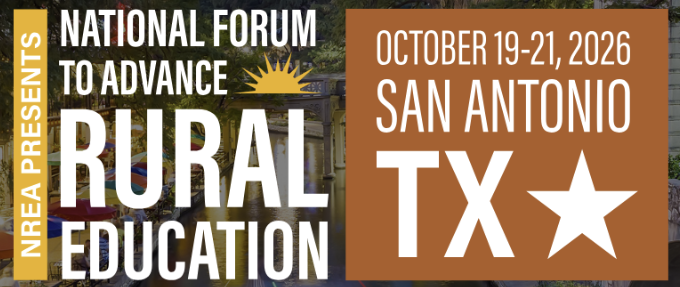
2026 National Forum to Advance Rural Education
October 19-21, 2026 | San Antonio, Texas
The Call for Proposals is now open for the 2026 National Forum to Advance Rural Education—the nation’s premier conference focused on advancing opportunity and innovation in rural schools and communities.
Hosted by the National Rural Education Association (NREA) in partnership with the Texas Rural Education Association, the Forum brings together rural educators, school and district leaders, higher education faculty, researchers, policymakers, and community partners from across the country.
2026 Theme: Ready, Set, Rural: Creating Opportunity Everywhere
This year’s theme celebrates the readiness, resilience, and resourcefulness of rural communities—and the power of education to create pathways for learners of all ages.
What’s New for 2026: Rural Innovation & Impact Showcase Competition
A new national competition spotlighting proven, rural-centered innovations with measurable impact. Finalists will present live at the Forum, with the winning initiative receiving a $5,000 award.
3 Ways to Present
1. Learning Sessions highlighting innovative practice
2. Research Sessions advancing rural education research
3. Rural Innovation & Impact Showcase Competition
Proposals Due: March 27, 2026
Bring your ideas. Share your impact.
Join us in San Antonio for #RuralEdForum 2026.
New this year is our third day's Innovation & Impact Showcase!
We are inviting K-12 schools who are doing amazing working their rural communities that is moving the needle to apply.
The Top Five applications will be able to pitch their innovation on that third day and be eligible for winning a grant prize of $5,000!
The information on the application process is attached and the link to the Cvent site is here: Home - 2026 National Forum to Advance Rural Education

Teacher Training and Recruitment Grants available
The Wisconsin Department of Workforce Development is accepting applications for Teacher Training and Recruitment grants. This expanded Wisconsin Fast Forward grant program aims to recruit and prepare individuals to teach in school districts in Wisconsin with the most prevalent need.
Up to $1 million is available to 501(c)(3) or (4) nonprofits to design and implement programs that will increase the number of instructors working in low income and/or urban Wisconsin schools. Qualified Wisconsin nonprofit organizations can apply for up to $250,000 to recruit, train, and license teachers.
Applications are due 3 p.m. CST on Thursday, March 19, 2026.
Find additional information in the Grant Program Announcement and related grant program materials at the Wisconsin Fast Forward website.
Thank you for your interest in the Wisconsin Fast Forward grant program.
John Roos
Director, Office of Skills Development
Wisconsin Department of Workforce Development
Behavioral Threat Assessment and Management (BTAM) Training Sessions
OSS will be providing opportunities statewide for BTAM training in 2026. Dates and locations are listed below. Registration links are also available on the OSS website Training Opportunities page. If you have any questions, please do not hesitate to contact our Threat Assessment Specialist, Sue Williams, at Susan.Williams@wisdoj.gov.
Monday, March 2 (part 1) and Tuesday, March 10 (part 2) – Virtual
Friday, March 13 – Location TBD – Antigo
Wednesday, April 8 – Mosinee School District – Mosinee
Wednesday, April 22 – Mosaic Technologies Training Center – Cameron
Thursday, June 11 – Menasha High School – Menasha
Wisconsin School Safety Coordinators Association