WiRSA (Wisconsin Rural Schools Alliance) - Strong Schools - Strong Communities

WASB’s strong leadership is focused on Setting The Record Straight
Setting The Record Straight: Analyzing Per-Pupil Expenditures and The Missing Context Beneath the Metrics Part 1 - by David Martin | Jul 15, 2026 | Legislative Update Blog, Setting the Record Straight
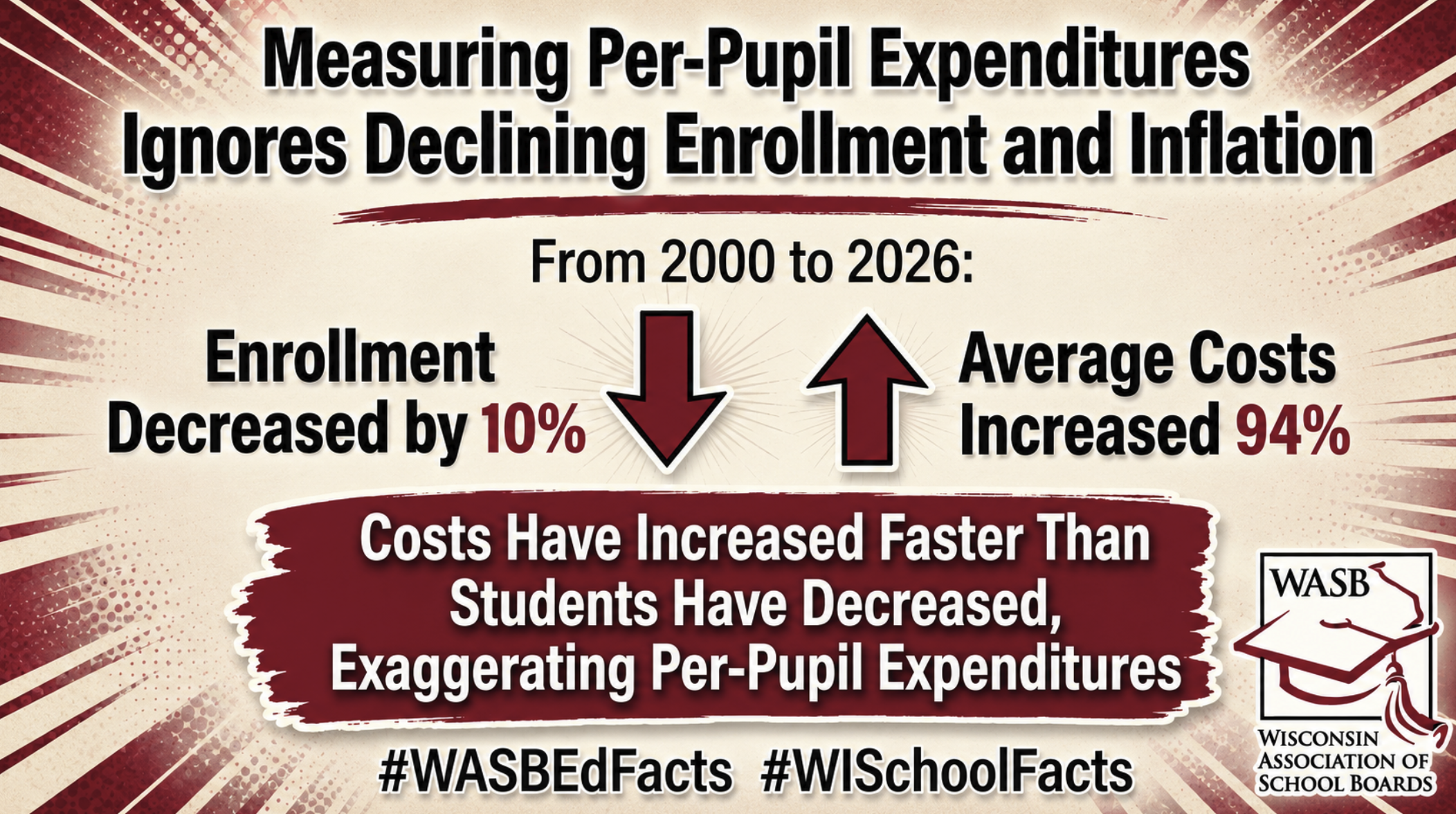
Claim: Public schools do not need more funding and are not exploring efficiency quickly enough. Per-pupil expenditures are at their highest level since 2000, even when adjusting for inflation.
Facts: Per-pupil spending is a metric that lacks a great deal of context surrounding declining enrollment and inflation. It also ignores the fiscal efficiencies of school districts have engaged in already.
From 2000 to 2026, costs have increased dramatically. In fact, the Bureau of Labor Statistics states that $1 in 2000 has the same buying power as $1.94 today. In other words, costs have gone up around 94% in a 26-year period.
In the 2000-01 school year, DPI states that 879,476 students were enrolled in public schools. In the 2025-26 school year, enrollment has declined to 791,794. This is a loss of 87,682 students statewide. This represents a decline of nearly 10% of students over this time period. A 10% decrease in students at the same time as a 94% increase in costs will without a doubt make per-pupil expenditures appear inflated.
Costs for schools are in large part fixed, not variable, meaning that even with a decline in students (which drops revenues) many costs schools incur do not drop. For example, building operations, maintenance, and costs for some lines of insurance are largely immune to drops in students. Transportation routes are only able to be eliminated or consolidated after significant enrollment declines, meaning it takes some time for cost saving measures to be implemented for transportation. Additionally, we know that students do not all get up and leave at the same time. Students are lost via a gradual trickle, meaning cost-saving measures such as laying off staff or closing school buildings cannot always be implemented immediately. Several years of student declines must be experienced before they can be implemented. We also know that schools have engaged in these measures. Just via one metric, as of February 2026 69 school buildings have closed within the past two years statewide. Furthermore, schools have explored ways to share services, cut programs, reduced staff benefits, and more to better live within their existing revenues.
Note: This post is part of the WASB “Setting the Record Straight” initiative to combat misleading narratives and decontextualized statistics (“Claims”) about public education. This will be a weekly blog series with accompanying social media posts on our Facebook and X (Twitter) accounts.
The WASB has created this initiative to equip school leaders with accurate information and effective talking points. Think of these as a foundation — they become most powerful when paired with your district’s own data, experiences, and stories. Adapt them, expand on them, and use them to strengthen trust in Wisconsin’s public schools.
WASB’s strong leadership is focused on Setting The Record Straight
Setting The Record Straight: Analyzing Per-Pupil Expenditures and The Missing Context Beneath the Metrics Part 2 - by David Martin | Aug 7, 2026 | Legislative Update Blog, Setting the Record Straight
Costs Incurred by School Districts Inflate Faster than Average
Claim: Public schools do not need more funding and are not exploring efficiency quickly enough. Per-pupil expenditures are at their highest level since 2000, even when adjusting for inflation.
Facts: Several costs that school districts incur (and take up a large portion of every district’s budget) have increased much more significantly than costs on average (roughly 2.5% since 2000). Let’s explore two examples: insurance and transportation costs.
Health Insurance: Over the past 15 years, Wisconsin school districts have experienced insurance cost increases that consistently outpace both inflation and state educational funding growth. Department of Administration data shows that employee health insurance costs for school districts have grown at an average rate of approximately 6% annually, even after districts implemented higher deductibles, increased employee contributions, and narrowed provider networks.
Sources: Department of AdministrationProperty and Casualty insurance: Wisconsin Office of the Commissioner of Insurance and National Association of Insurance Commissioner reports, along with WASB‑endorsed broker outlooks show multi‑year premium increases frequently exceeding 10% annually for school districts. As a result, even districts with stable enrollment and conservative spending practices experience recurring structural deficits driven largely by non‑discretionary insurance costs.
Sources: Office of the Commissioner of Insurance; WASB endorsed brokerWhile costs economy-wide increase around 2.5% each year, insurance costs (both health and property) for school districts increase between 6-7% each year. Considering the overall percentage of a school district budget that is spent on insurance, these costs drive large deficits in even the most frugal districts. Importantly, these costs are largely unaffected by declines in student enrollments.
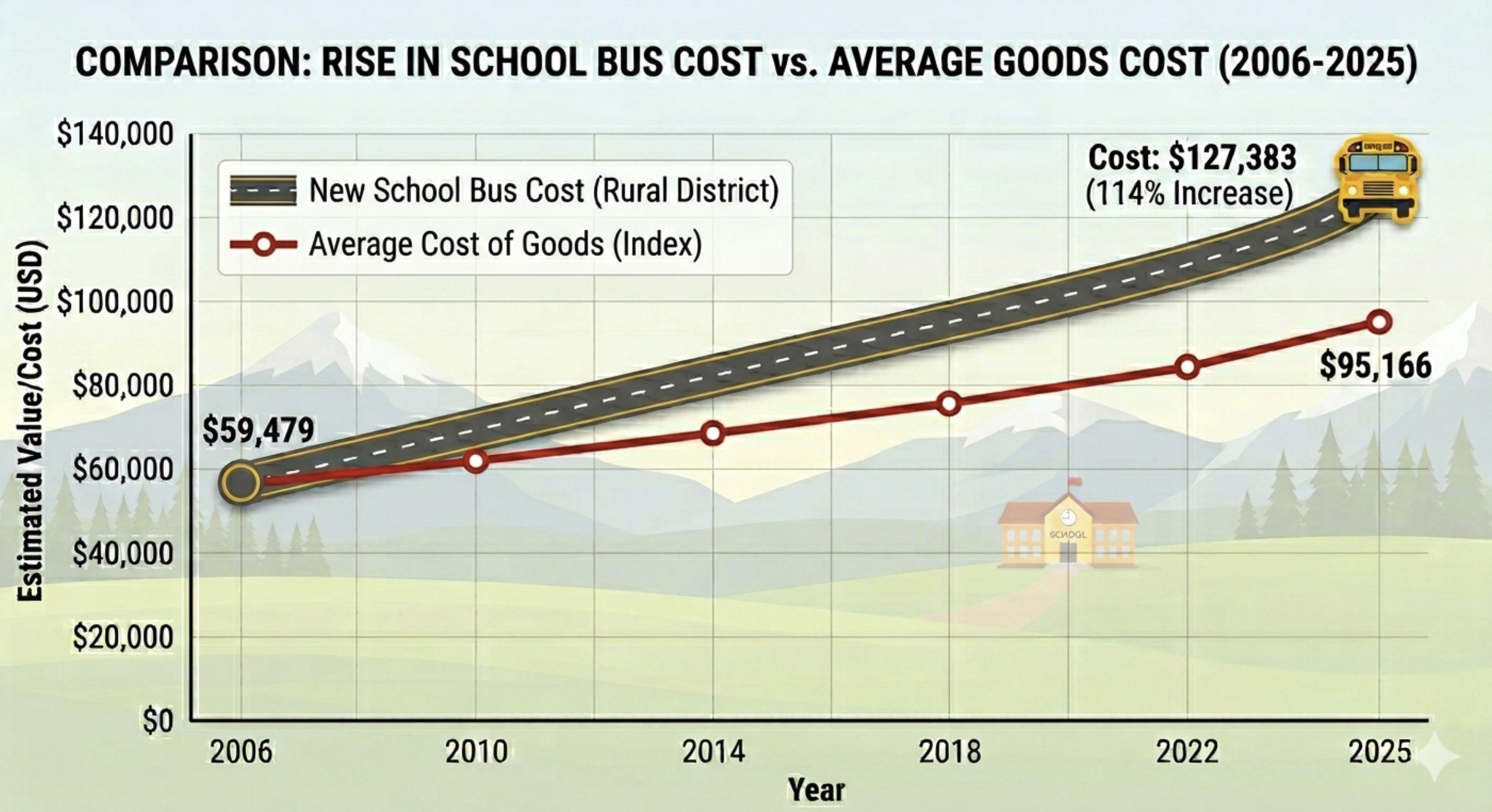
Transportation: For all school districts, transportation is a large expense. For some, it has an even greater impact on budgets. Particularly in rural and large geographic districts, transportation costs can be incredibly expensive as they must bus students over a large area. For example, in one rural school a new school bus in 2006 was $59,479. By 2025, a new school bus cost the district $127,383, a 114% increase in price. Over the same time, the average cost of goods increased 60%.
Other types of costs are essentially brand new since 2000 or have necessarily expanded as society changes. Technology and school safety are two of these areas. Schools faced little to no costs in these areas as of 2000, but they now take up a large portion of the budget with little ability to make cuts. While there were some initial startup grants funded by the state, these areas have not seen ongoing state investment.
WASB’s strong leadership is focused on Setting The Record Straight
Setting The Record Straight: Analyzing Per-Pupil Expenditures and The Missing Context Beneath the Metrics Part 3 - by David Martin | Aug 20, 2026 | Legislative Update Blog, Setting the Record Straight
State Decisions Have Schools Doing More – Without the Help to Match
Claim: Public schools do not need more funding and are not exploring efficiency quickly enough. Per-pupil expenditures are at their highest level since 2000, even when adjusting for inflation.
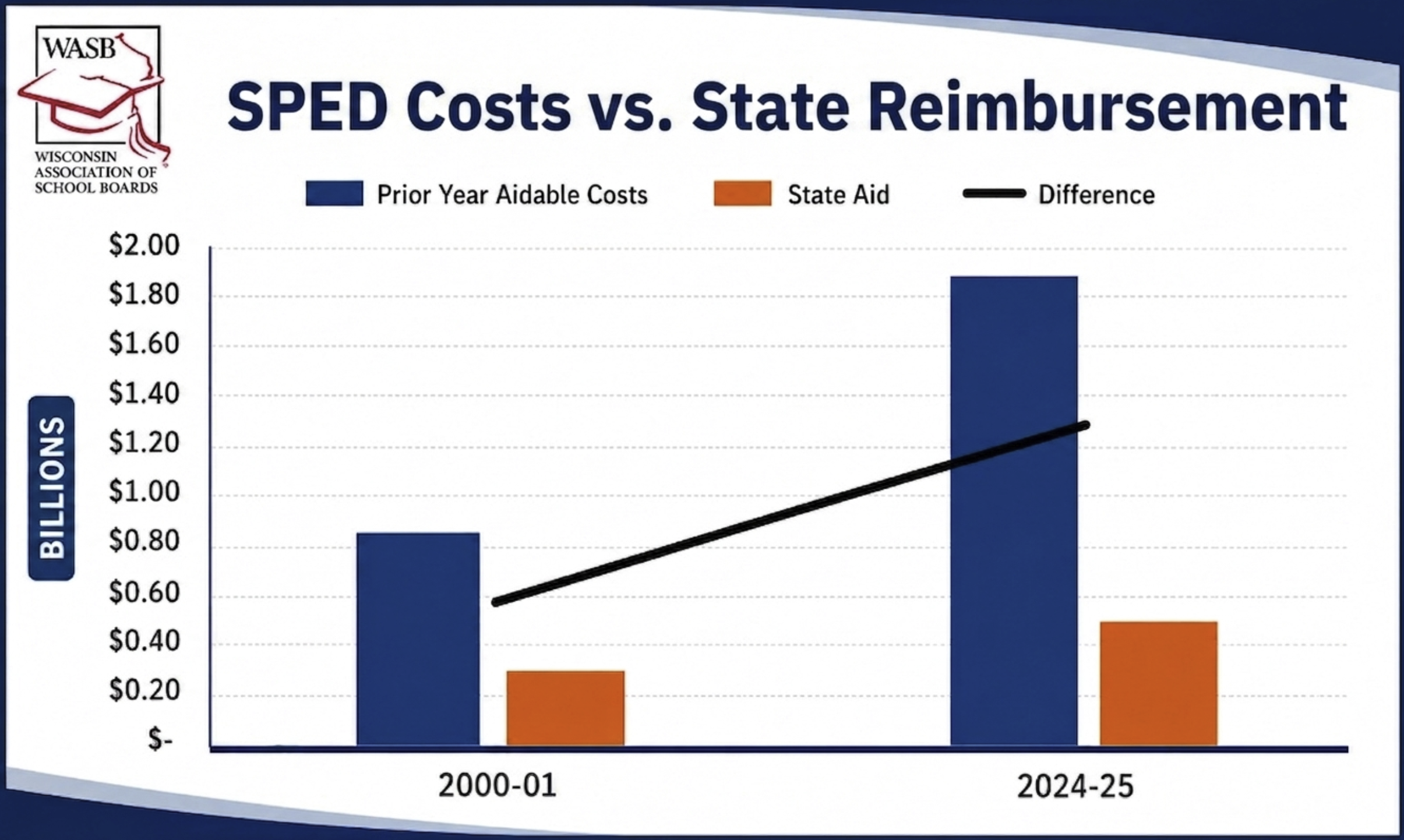
Facts: During the last few state budgets, Wisconsin has made progress with significant increases in state reimbursement for special education services. However, the number of students with identified disabilities, and the costs and needs for educating special education pupils have far outpaced increases in state aid since 2000.
In 2000, prior year aidable costs totaled nearly $881 million while total state reimbursement totaled $315.7 million. Meanwhile, in the 2024 school year, prior year aidable costs equaled nearly $1.876 billion while total state aid was almost $575 million. So, while statewide special education costs rose by nearly $1 billion since 2000, state aid for these costs only rose by around $250 million. This disparity certainly causes per-pupil expenditure figures to appear higher than they would have in 2000.
Source: Historical Special Education Expenditures
Schools have also had countless mandates and responsibilities thrust on them since 2000, often without any additional funding. These have come from state and local community expectations. Costs go up for each new responsibility that is asked of our schools. (Check out this document from the Legislative Fiscal Bureau that details statutory requirements of school districts. Spoiler alert: it is 43 pages! The 2009 version of this paper was 35 pages.)
Note: This post is part of the WASB “Setting the Record Straight” initiative to combat misleading narratives and decontextualized statistics (“Claims”) about public education. This will be a weekly blog series with accompanying social media posts on our Facebook.
The WASB has created this initiative to equip school leaders with accurate information and effective talking points. Think of these as a foundation — they become most powerful when paired with your district’s own data, experiences, and stories. Adapt them, expand on them, and use them to strengthen trust in Wisconsin’s public schools.
Newly remade WASB Advocacy Toolkit is published and online!
By David Martin on July 16, 2026
The WASB GR Team has launched the latest version of the WASB Advocacy Toolkit. Newly remade, the toolkit is available in the traditional PDF version as well as integrated into a brand new webpage! Our Advocacy Toolkit is designed to equip school board members with the tools, tips, and strategies they need to be the best advocates for their communities and students. This guide takes members through everything from how to navigate the legislative process, to holding a successful meeting with your legislators, to building relationships within your own communities, and more. The new webpage also offers sample materials to help you get started with your own efforts. Feel free to download a copy of the booklet, peruse the website, or reach out to the GR Team if you would like a printed
WASB’s strong leadership is focused on Setting The Record Straight
Setting The Record Straight: Student Achievement in Public vs. Voucher Schools Part 1
by David Martin | Jun 18, 2026 | Legislative Update Blog, Setting the Record Straight
Claim: When accounting and adjusting for different levels of income, students with disabilities, and English learners, private voucher schools deliver better student achievement than public schools with less money.
Comparing Achievement Levels in Public and Voucher Schools Ignores Differences in Requirements and Flexibility
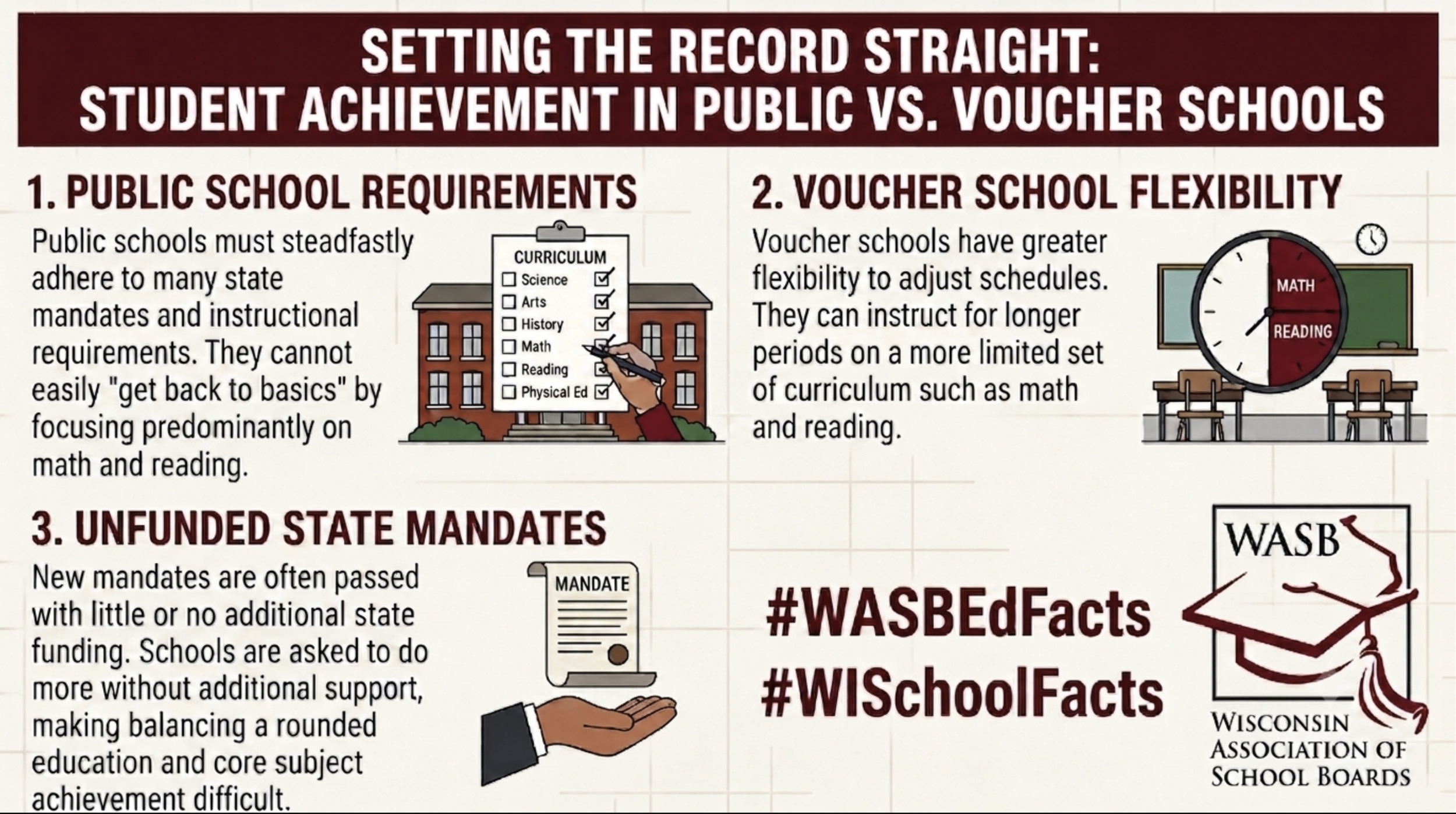
Facts: Public schools must adhere to state mandates and instructional requirements more steadfastly than private voucher schools. For example, public schools cannot easily adjust their schedules to predominantly focus on math or reading (the two achievement metrics most often referred to by education advocates). They must provide instruction in science, social studies, health, physical education, arts, financial literacy, technology, and more (Check out page 9 of this document for a running record of the curriculum requirements of public school districts).
Voucher schools, of course, instruct in many of these subject areas as well, but they have more flexibility to adjust their schedules and instruct for longer periods on a more limited set of curriculum areas, particularly those most used as a benchmark for student achievement. Public schools recognize and promote the value of a well-rounded curriculum and education, however as student achievement continues to lag pre-pandemic levels many have pitched the idea of a “return to basics” in order to raise math and reading levels. That is easier said than done as public schools must ensure all state educational requirements are complied with (and more are added every year) and local community expectations and values are upheld.
This challenge of balancing rigorous academic priorities with an already crowded curriculum is further compounded by the steady stream of new state mandates placed on public schools. New state mandates – such as 2023 Wisconsin Act 20, which created new requirements surrounding early literacy instruction and assessment as well as parental notifications or 2023 Wisconsin Act 60, which required pupils to earn at least 0.5 credit of personal financial literacy to graduate from high school– are usually passed with little/no additional state funding. These robust new requirements are designed to raise achievement levels or better ensure preparedness in certain subjects. However, schools are expected to fit more into their already packed schedules and curriculum requirements without additional financial support. This compounds the challenges schools already face balancing well-rounded education with ensuring high achievement in core subjects such as math and reading.
Note: This post is part of the WASB “Setting the Record Straight” initiative to combat misleading narratives and decontextualized statistics (“Claims”) about public education. This will be a weekly blog series with accompanying social media posts.
The WASB has created this initiative to equip school leaders with accurate information and effective talking points. They provide additional context and background to explain the full picture that these claims often do not provide. This initiative is generalized and presented from a statewide perspective. It may not accurately reflect the situation on the ground for every school board or community as they are all unique and can vary widely.
WASB’s strong leadership is focused on Setting The Record Straight
Setting The Record Straight: Student Achievement in Public vs. Voucher Schools Part 2
by David Martin | Jun 26, 2026 | Legislative Update Blog, Setting the Record Straight
Claim: When accounting and adjusting for different levels of income, students with disabilities, and English learners, private voucher schools deliver better student achievement than public schools with less money.
Comparing Public and Voucher Achievement is Not Apples to Apples
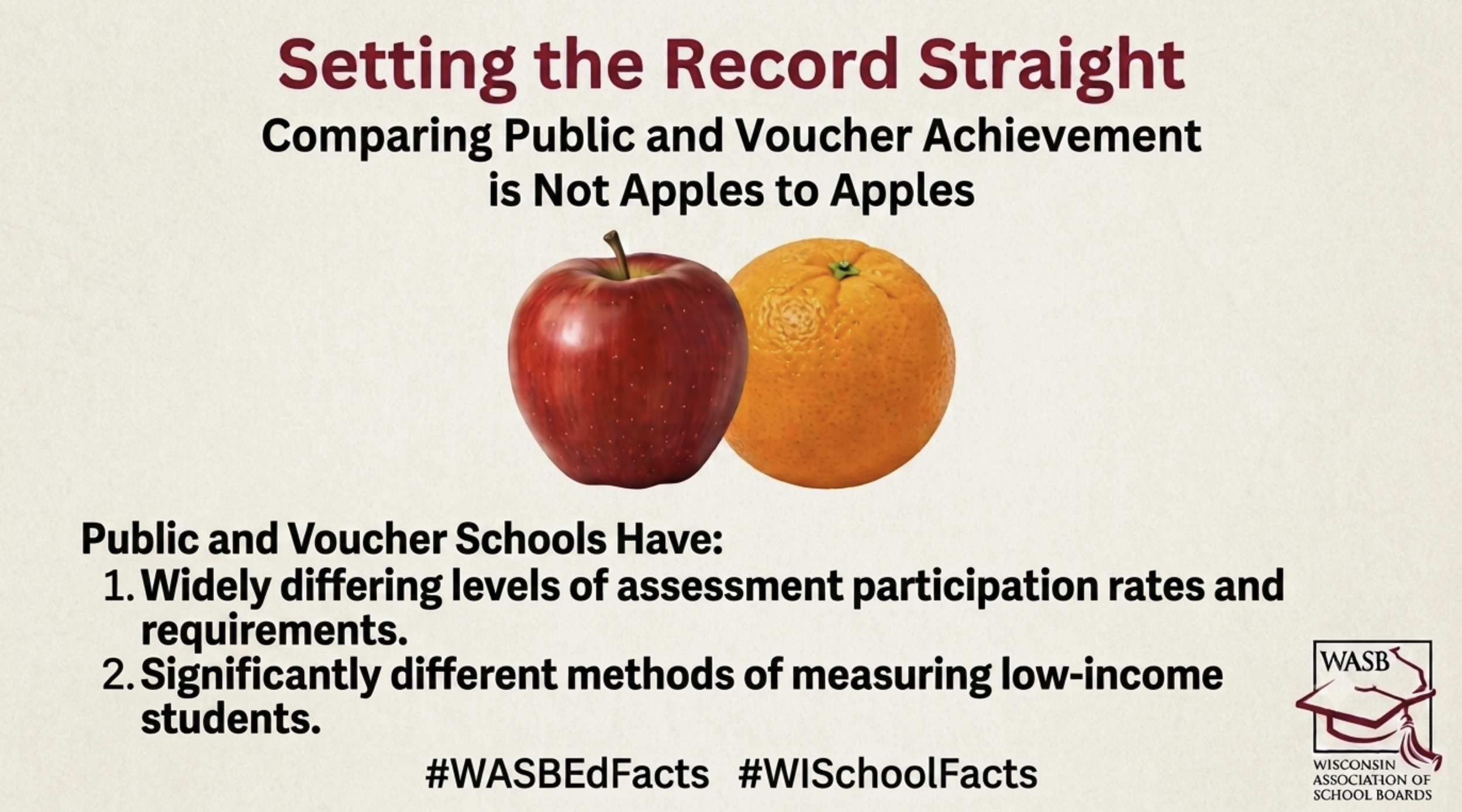
Facts: While public schools must test all of their students, private voucher schools can select whether they only test their students attending the school on a voucher or all of their students — often whichever option produces the better result.
Both parents of public school and parents of private voucher school students can elect not to have their child tested. However, public schools are penalized on state report cards if opt-outs are too high in a given school (must be at least 95% participation) while private schools are not.
According to DPI data, private school parents are increasingly opting out their voucher students from standardized testing leading to a large opt-out discrepancy. Only about 77% of choice students participated in standardized tests in the 2024-25 school year, a 3 percentage point decline from 2023-24. About 96% of eligible public school students participated (see link to DPI data).
Since voucher school student participation significantly lags public school participation, this obscures overall school performance and undermines accountability. Lower participation can make results less representative. Further, it can inflate reported performance if lower‑scoring students are disproportionately missing.
Source: Choice Program Assessment Data; DPI: Test Results
The claim is often made that voucher schools accept more students from a lower socioeconomic status than an average public school.
Adjusting for family income levels across the two sectors is not as straightforward as it might seem. Voucher proponents often claim they adjust for income differences but typically what this means is that they compare public school students who qualify for free- and reduced-price meals with voucher students under the assumption that voucher students are uniformly low-income.
To be eligible to attend a private school with a voucher for the first time, the total family income of a student in the Milwaukee or Racine programs must not exceed 300% of the federal poverty level. For students in the statewide voucher program attending a private school with a voucher for the first time, total family income must not exceed 220% of the federal poverty level.
By contrast, to qualify for a free school meal, total family income must not exceed 130% of the federal poverty level. To qualify for a reduced-price school meal, total family income must not exceed 185% of the federal poverty level.
There is a considerable difference between 185 % of the federal poverty level and 220% of the federal poverty level and an even bigger difference between 185% of the federal poverty level and 300 percent of the federal poverty level.
Furthermore, a pupil attending a private voucher school whose family income increases above the initial eligibility limit may continue to attend the private voucher school and may continue to receive a voucher. Additionally, if a pupil participates in the Milwaukee or Racine voucher program and then moves to another school district, the pupil can participate in the statewide private school voucher program even if his or her family income exceeds 220% of the federal poverty level, so long as the pupil met the income eligibility guidelines for the Milwaukee or Racine program at the time of his or her initial participation.
For those reasons, the typical approach to comparing private voucher school students and low-income public school students can lead to misleading results and is not an “apples-to-apples” comparison.
Note: This post is part of the WASB “Setting the Record Straight” initiative to combat misleading narratives and decontextualized statistics (“Claims”) about public education. This will be a weekly blog series with accompanying social media posts.
The WASB has created this initiative to equip school leaders with accurate information and effective talking points. They provide additional context and background to explain the full picture that these claims often do not provide. This initiative is generalized and presented from a statewide perspective. It may not accurately reflect the situation on the ground for every school board or community as they are all unique and can vary widely.
WASB’s strong leadership is focused on Setting The Record Straight
Setting The Record Straight: The Use of COVID Funds in Public Schools
by David Martin | Jun 10, 2026 | Legislative Update Blog, Setting the Record Straight
Claim: Public schools irresponsibly used $2.3 billion of one-time Federal COVID funding for ongoing expenditures when it was intended to be used to combat pandemic learning loss.
While Federal COVID funds were intended to be used above and beyond regular funding streams to address pandemic-related challenges, state government used them as an opportunity to provide minimal increases to schools.
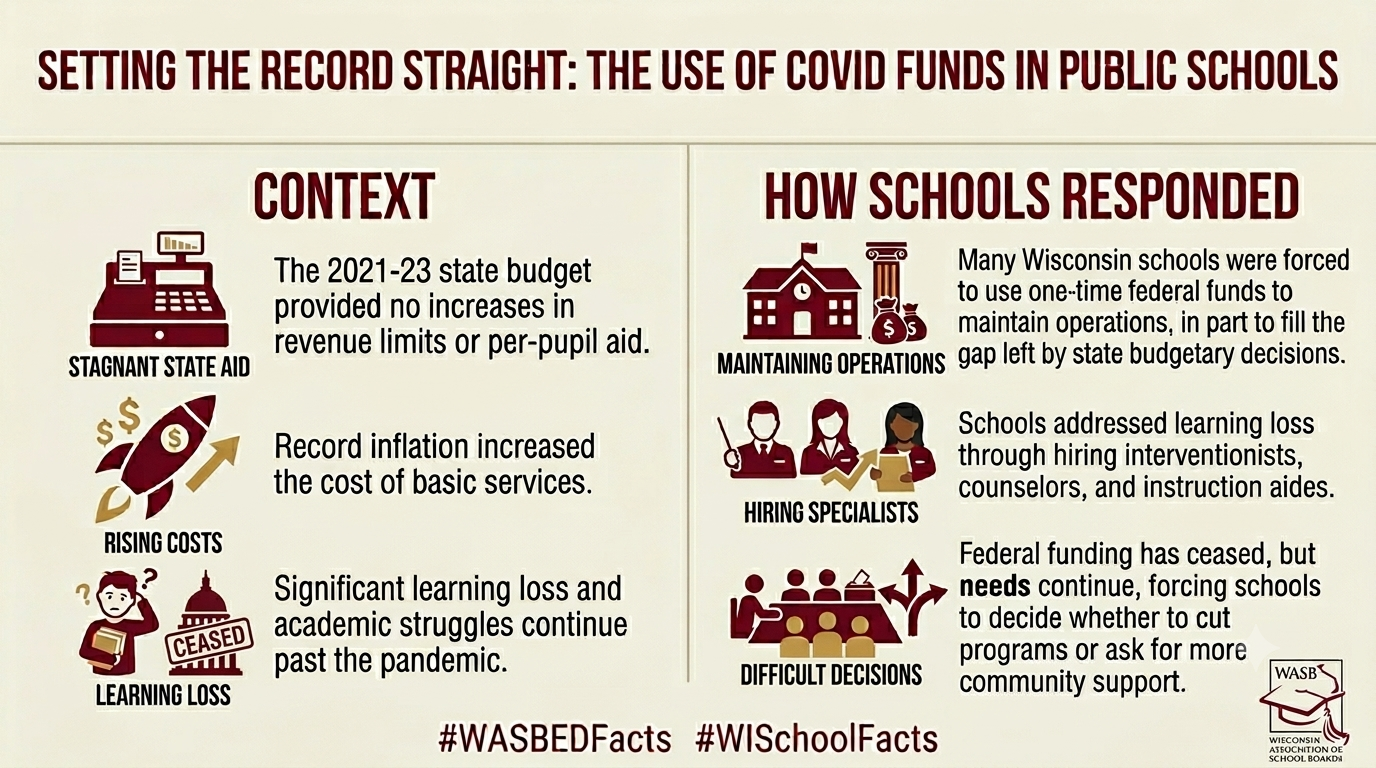
Facts: In the 2021-23 state budget, state revenue limits and per-pupil aid were not increased at all. Only small increases were provided in general aids (which falls within revenue limits and, since limits were held flat, reduced property taxes but provided no additional funding for schools) and special education. The result: state support for public schools during the pandemic stayed largely flat. This came at a time of record inflation, as supply chains worldwide were affected. Schools had to find ways to continue maintaining their basic services as costs were increasing dramatically as the pandemic continued.
The lack of state support during the COVID pandemic contributed to many Wisconsin schools using their one-time funding for ongoing expenses, unlike other states that predominantly used their one-time federal dollars to support learning loss and provide additional supports to students during an unprecedented time. Wisconsin public schools did in fact use their federal funding to address these concerns, but the degree to which they could spend in these areas was likely muted by having to fill in gaps left by state budgetary decisions.
As the pandemic (and federal funding) evolved, school districts shifted how they were spending COVID relief aid. Initially, a greater emphasis was focused on supporting virtual learning and acquiring new technological and curriculum updates to respond to the challenge of school closures and virtual learning. However, as the pandemic continued and schools began to reopen, spending priorities shifted. What became evident quickly was the immense learning loss suffered by students during the period of solely virtual learning and widespread closures throughout society. Schools began to spend their federal dollars increasingly on addressing this learning loss, which contributed to additional staff. Interventionists, counselors, and instructional aides were needed to bring kids back up to speed. Many of these measures were successful, but learning loss and the need for additional supports for students did not vanish with the end of the pandemic. Academic achievement continues to lag pre-pandemic levels in many school districts. Since federal support ceased, many school districts had to decide whether they should cut staff or programs that have been aimed at raising achievement or go to their communities to ask for additional property tax revenues to continue these programs.
Sources: Summary of 2021-23 State Budget; Antigo Times Analysis of ESSER Spending; Wisconsin Policy Forum “Adding it All Up”
Note: This post is part of the WASB “Setting the Record Straight” initiative to combat misleading narratives and decontextualized statistics (“Claims”) about public education. This will be a weekly blog series with accompanying social media posts.
The WASB has created this initiative to equip school leaders with accurate information and effective talking points. They provide additional context and background to explain the full picture that these claims often do not provide. This initiative is generalized and presented from a statewide perspective. It may not accurately reflect the situation on the ground for every school board or community as they are all unique and can vary widely.
WASB Call for Proposals Deadline: Friday, June 19th
Submit Your Application Now
The 2027 State Education Convention Call for Proposals deadline is approaching. Planning is underway and this years theme is Leading Today, Shaping Tomorrow. The convention is scheduled for Jan. 20-22 at the Baird Center in Milwaukee.
Share your expertise with school leaders from around the state by submitting your stories and strategies that address advocacy, leadership, facilities, rural schools, human resources, mental health, community engagement, school funding, teacher retention and anything else that you feel school leaders could benefit from hearing. What are your success stories? What strategies are working?
Learn more about the breakout session submission and evaluation process on our website. The deadline to submit a proposal is Friday, June 19.
Please contact info@wasb.org if you have questions or issues when submitting a proposal.
WASB’s strong leadership is focused on setting the record straight with the cost-effectiveness of Public vs. Voucher Schools
Setting the Record Straight: Cost-Effectiveness of Public vs. Voucher Schools Part 3
by David Martin | May 18, 2026 | Legislative Update Blog, Setting the Record Straight, State Issue
CLAIM: When accounting and adjusting for different levels of income, students with disabilities, and English language learners, private voucher schools deliver better student achievement than public schools with less money.
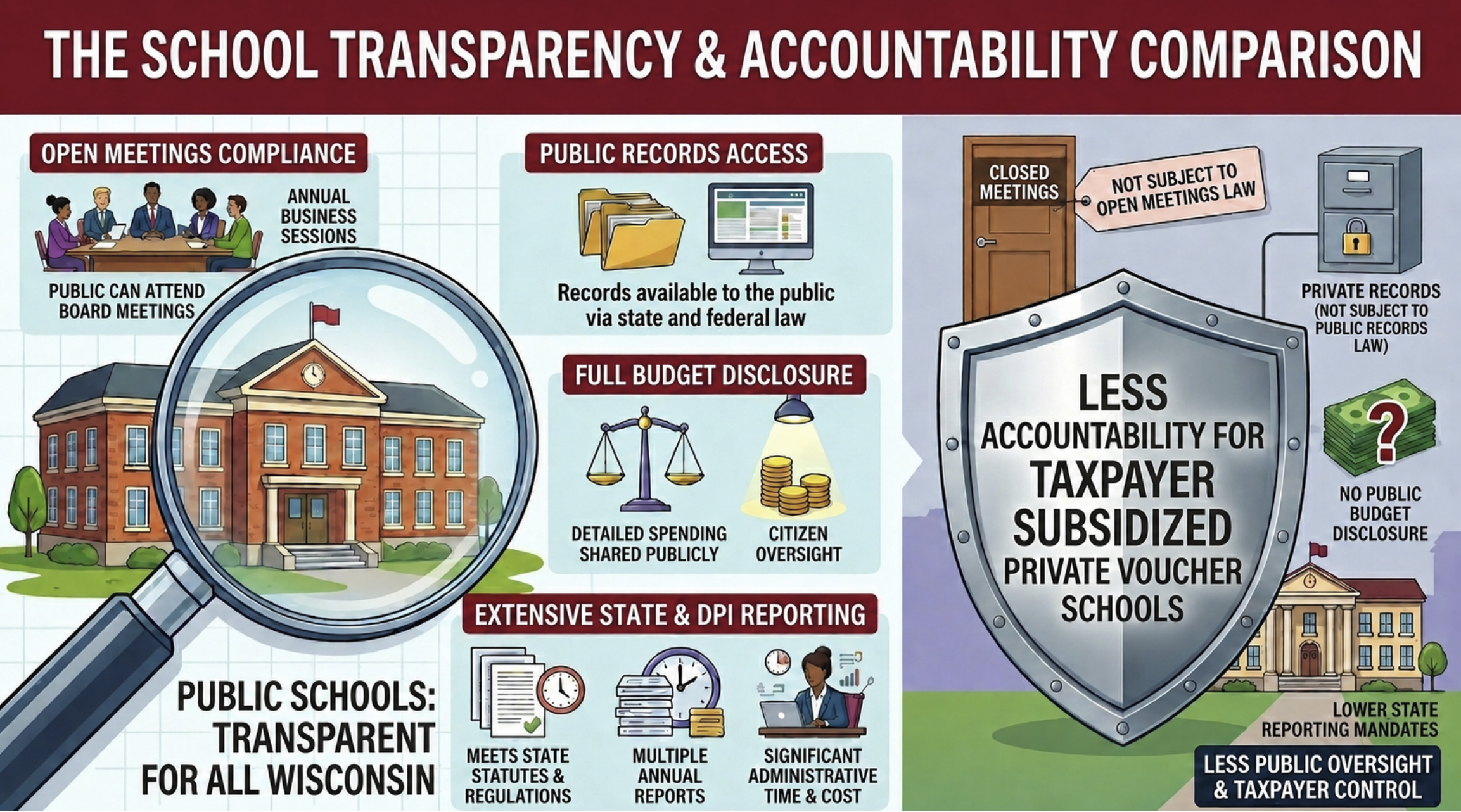
FACTS: One important distinction between taxpayer-subsidized private voucher and public schools is the level of reporting and accountability measures that are required. Public schools have a vast amount of reporting requirements they must undertake both through federal and state law and agency regulations. Furthermore, public schools are accountable to the public through open meetings law, public records law, annual budget meetings, and regular school board meetings.
There are costs to comply with these regulations including a significant amount of administrative/staff time that do not apply to private voucher schools even though they receive public tax dollars. Public schools nonetheless fulfill these duties and recognize it is a core part of their mission.
This post is part of the WASB “Setting the Record Straight” initiative to combat misleading narratives and decontextualized statistics (“Claims”) about public education. This will be a weekly blog series with accompanying social media posts on our Facebook and X (Twitter) accounts.
The WASB has created this initiative to equip school leaders with accurate information and effective talking points to provide important information and context to these claims. Think of these as a foundation — they become most powerful when paired with your district’s own data, experiences, and stories. Adapt them, expand on them, and use them to strengthen trust in Wisconsin’s public schools.
WASB’s strong leadership is focused on setting the record straight with the cost-effectiveness of Public vs. Voucher Schools
Setting The Record Straight: Cost-Effectiveness of Public vs. Voucher Schools Part 2
by Chris Kulow | May 6, 2026 | Legislative Update Blog, Setting the Record Straight, State Issue
This post is part of the WASB “Setting the Record Straight” initiative to combat misleading narratives and decontextualized statistics (“Claims”) about public education. This will be a weekly blog series with accompanying social media posts on our Facebook and X (Twitter) accounts.
CLAIM: When accounting and adjusting for different levels of income, students with disabilities, and English learners, private voucher schools deliver better student achievement than public schools with less money.
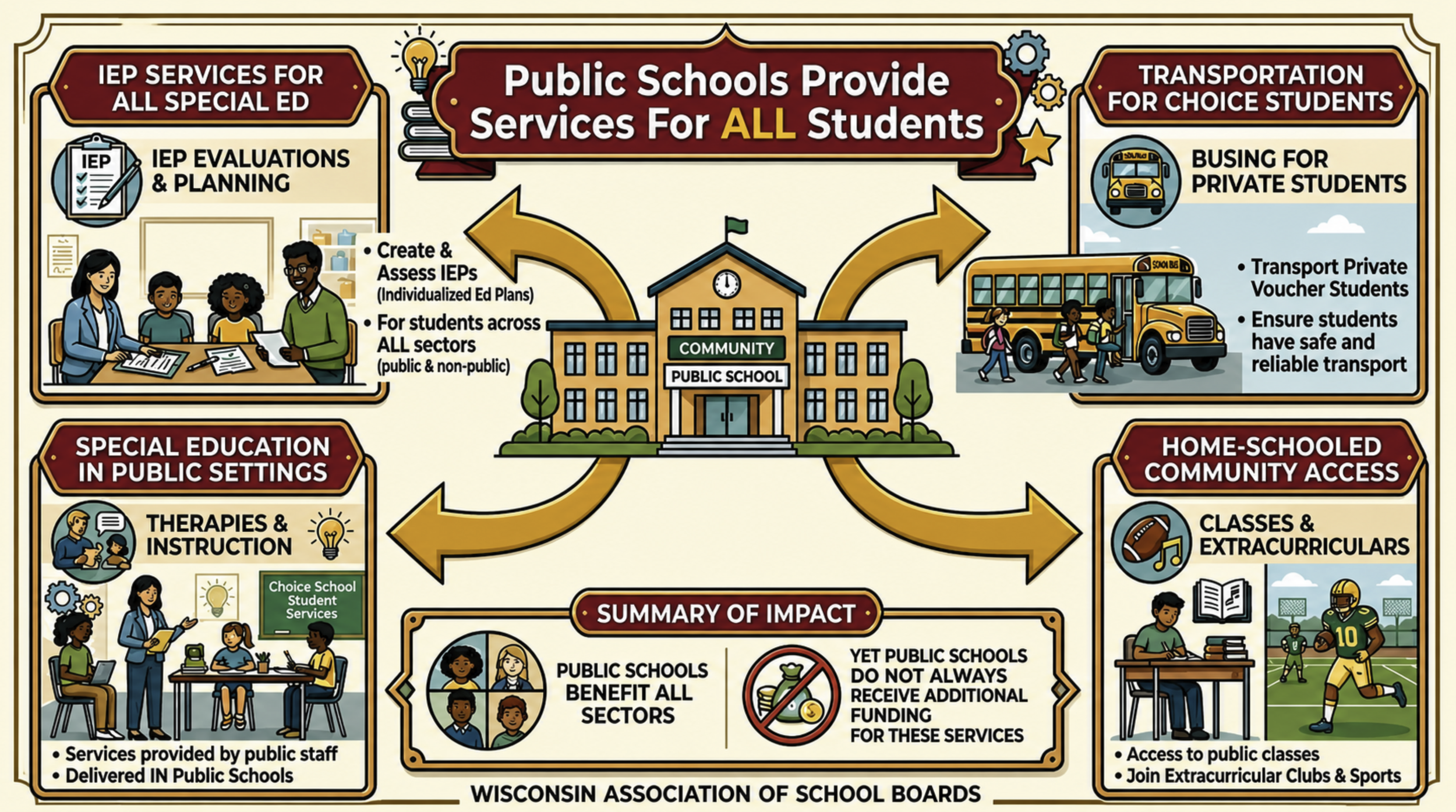
FACT: Many costs incurred by public schools are not solely reserved for public students. For instance, public schools are responsible for creating and assessing IEP’s (individualized educational plans for special education students) and transporting private voucher students. Furthermore, in many instances, the actual special education services for students attending a choice school are provided by and in public schools. Home-schooled and private school students also have access to public school classes and home-schooled students extracurriculars in certain circumstances, yet the public school receives no extra revenue for these students. In other words, public schools provide benefits for students across all educational sectors yet do not always receive additional funding for these services.
Sources: Private student transportation; Special education services; Homeschool access; Private student access
WASB’s strong leadership is focused on setting the record straight with the cost-effectiveness of Public vs. Voucher Schools
WASB is LEADING the way by launching a new resource and advocacy campaign designed to equip school leaders with the messaging and talking points they need to defend their local public school districts from misleading claims that so often dominate the narrative on public education.
In their Part 1 series WASB focuses on the claim: When accounting and adjusting for different levels of income, students with disabilities, and English learners, private voucher schools deliver better student achievement than public schools with less money.
by David Martin | Apr 29, 2026 | Legislative Update Blog, Setting the Record Straight, State Issue
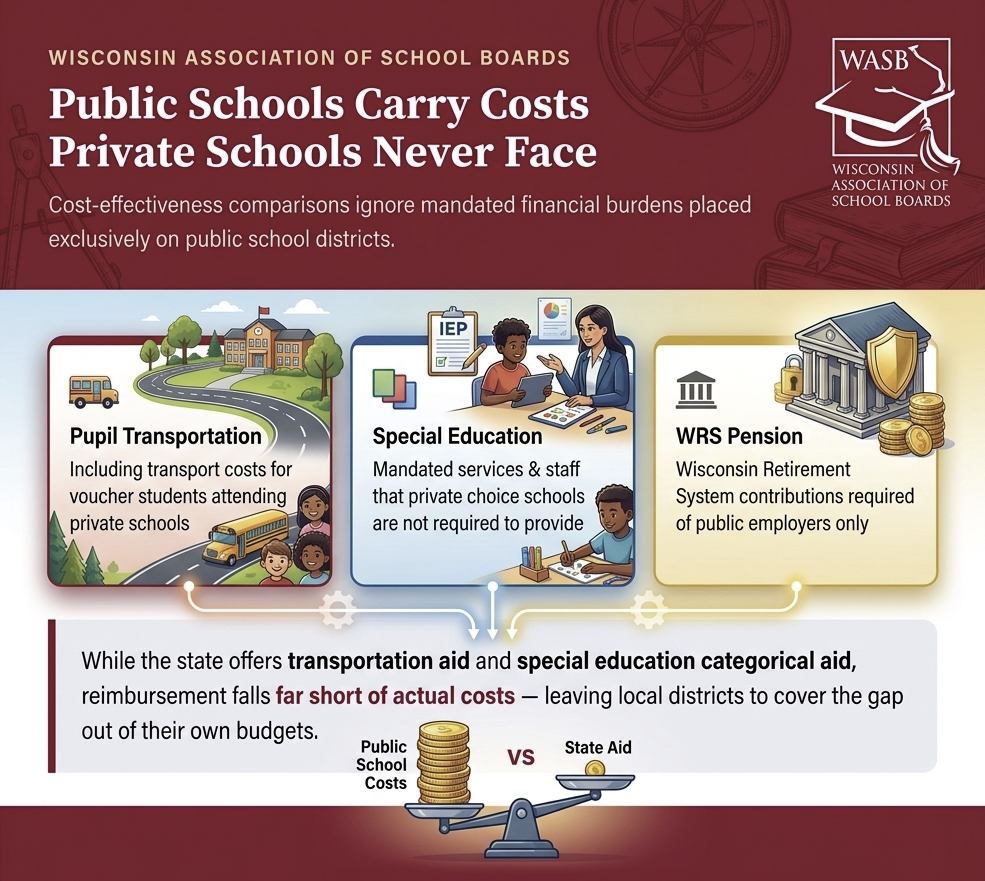
FACT: Assertions about cost-effectiveness ignore that public schools have certain costs mandated upon them that private schools do not. These include pupil transportation costs (including the costs of transporting voucher pupils), special education costs, and pension (WRS) costs, to name a few. Private schools have none of these costs mandated upon them. While some of these costs are partially reimbursed by the state (transportation aid, special education categorical aid) this reimbursement is nowhere near adequate to cover these costs meaning districts pick up a large portion of the tab themselves.
Sources: Transportation; Special Education; WRS Pension Costs
FACT: Reports on the cost effectiveness of voucher systems only includes details of their public financing. There is no consideration given to the amount of private donations or funding raised through tuition that these schools collect.
Note: The WASB has created this initiative to equip school leaders with accurate information and effective talking points. Think of these as a foundation — they become most powerful when paired with your district’s own data, experiences, and stories. Adapt them, expand on them, and use them to strengthen trust in Wisconsin’s public schools.