WiRSA (Wisconsin Rural Schools Alliance) - Strong Schools - Strong Communities

WiRSA Conference 2026 ”Celebrating Innovation and Resilience”
WiRSA Conference Room Reservations - OPEN NOW!
Rate: $101.00 Single Occupancy State Rate - $124.00 Double Occupancy State Rate
Guests can book their reservations online 24 hours a day by using the following link: Holiday Inn Express: WiRSA Conference 2026
Making reservations over the phone, please call 715-344-0200 and press #1. When making reservations, please reference the group name, WiRSA Conference 2026, or the Group Block Code: WIR.
Group rate will be available until 09/28/2026 (or until the block is full). Remaining rooms in your will be released for general reservations at the hotel's prevailing daily rate, which may be higher than your group rate.
BOOK YOUR ROOM TODAY!
WiRSA Conference Registration- OPEN NOW!
Thursday, October 29 & Friday, October 30, 2026
Welcome Reception
Wednesday, October 28, 2026 - 6:00 p.m.
Stevens Point Convention Center - Stevens Point, WI
A conference for administrators, board members, teachers, CESA employees, higher education professionals, public library administrators, elected officials, and citizens passionate about rural school and community issues.
WiRSA Conference - CALL FOR PROPOSALS
“Celebrating Innovation & Resilience” focuses on how rural schools thrive by responding to challenges and limitations with creative solutions. Breakout sessions will align with one of the following tracks:
Resource Management & Collaboration: Strategies for utilizing limited resources; managing budgets; addressing declining enrollment; and responding to community needs, such as school-sponsored child care or health care/mental health partnerships.
Technology & Future Readiness: Focusing on emerging technologies, preparing students for a workforce shaped by AI, and leveraging AI tools for school leaders.
Educational Pathways & Programs: Highlighting innovative educational programs and effective classroom practices, including Academic and Career Planning (ACP), high school pathways, dual credit options, and the development of partnerships with higher education and businesses.
Proposals are due by Friday, June 26, 2026

Governor Evers Signed Bills and Vetoes
Friday, April 3, 2026 - Signed into Law
SB-785 DPI Licensing Portal (Jagler, John) Including information about investigations of license holders in an online licensing portal maintained by the Department of Public Instruction. Signed (Act 185)
Requires the state superintendent to maintain a free, searchable online licensing portal on the Wisconsin Department of Public Instruction’s (DPI) website that includes information related to license holders whose licenses are revoked and who are investigated by DPI; and
Outlines that the portal must include the name of the license holder and the outcome of the investigation, including if the investigation was terminated because the license holder voluntarily surrendered the license during the investigation.
This bill enhances the safety of all K-12 pupils by ensuring individuals who have their license revoked or are under investigation can be more easily identified by the public and future employers.
AB-530 Drone Operation (Kitchens, Joel) The operation of drones over school property and providing a penalty. Signed (Act 189)
Prohibits the operation of a drone over a property owned by a public, private, or Tribal school or a property where a public, private, or Tribal school is located and creates a penalty; and
Creates exceptions for drone operations at the direction of a sheriff or chief of a public protection service agency that has jurisdiction over the territory or with the expressed authorization of the governing entity of the school.
AB-1004, Prohibiting education employers from entering into certain agreements, now 2025 Wisconsin Act 186:
Prohibits a school board, governing body of a charter school, or governing body of a private school participating in a parental choice program or the Special Needs Scholarship program from entering into any agreement that:
Suppresses or destroys information related to immoral conduct by an employee;
Impacts the ability to report immoral conduct; or
Requires substantiated allegation or finding of immoral conduct be expunged from documents.
Provides civil liability immunity to an education employer that provides information on current or past employee conduct at the request of a prospective employer.
Vetoed
AB-750 Technical College Admission (Dittrich, Barbara) Admission of students to technical college programs. Vetoed (Link)
AB-582 Dual Enrollment (Murphy, Dave) Dual enrollment programs, creating the Council on Dual Enrollment, and transfer of postsecondary course credits. Vetoed (Link)
AB-460 Parental Choice (Duchow, Cindi) Pupil eligibility for parental choice programs based upon participation by a sibling or a dependent child of the pupil's parent or guardian. Vetoed (Link)
SB-699 Pupil Transport (LeMahieu, Devin) Alternative methods of providing pupil transportation services. Vetoed (Link)
SB-389 School Revenue Limits (Kapenga, Chris) The per pupil adjustment for school district revenue limits. Vetoed (Link)
Thursday, April 2, 2026 - Signed into Law
SB-391 School Bus Equipment (James, Jesse) Equipment of school buses with audiovisual recording devices. Signed (Act 160)
Allows for the use of audiovisual recording devices on school buses with the approval of the school board or the governing body of a private school, a Tribal school, or a charter school authorized under s. 118.40(2r) or (2x) to provide a safe environment on school buses for students;
Requires notice of the policy allowing audiovisual recording devices to be provided to parents and students, as well as posted clearly in the bus; and
Stipulates that recordings made shall remain confidential and may be used by only school officials and law enforcement personnel for investigations, school disciplinary actions, and criminal prosecution related to incidents occurring in or around the bus.
Vetoed
Press Release: Gov. Evers Delivers Radio Address, Celebrates Vetoing Bill to Require Wisconsin to Opt Into Nationwide Expansion of Private Voucher Schools Under ‘Big Beautiful Bill,’ Slams Republican Attacks on Public Education in America - Veto Message for Assembly Bill 602.
Press Release: Gov. Evers Vetoes Bill Requiring Wisconsin to Opt Into Nationwide Expansion of Private Voucher Schools Under ‘Big Beautiful Bill,’ Slams Republican Attacks on Public Education in America
WISCONSIN EXAMINER - Gov. Tony Evers vetoes Wisconsin participation in federal school choice tax credit program
Tuesday, March 31, 2026 - Vetoed
AB-103 School Policies (Dittrich, Barbara) School board policies related to changing a pupil’s legal name and pronouns. Vetoed (Link)
AB-100 Athletic Sports (Dittrich, Barbara) Designating athletic sports and teams operated or sponsored by public schools or private schools participating in a parental choice program based on the sex of the participants. Vetoed (Link)
Friday, March 27, 2026 - Signed into Law
AB-933DPI Remedial Legislation (Allen, Scott) Updating references to PI 34 of the administrative code and eliminating an obsolete grandfather provision related to a license to teach industrial arts (suggested as remedial legislation by the Department of Public Instruction). Signed (Act 136)
Removes cross-references that no longer exist in Wisconsin Department of Public Instruction administrative rules due to 2018 modifications and removes a grandfather provision that applied to individuals who taught industrial arts 90 years ago.
Vetoed
AB-663UW System (Dallman, Alex) Imposing certain prohibitions on foreign influence at University of Wisconsin System institutions. Vetoed (Link)
AB-614Teacher Authority (Goeben, Joy) A teacher’s authority to manage the teacher’s class, parental notification of disruptive or violent behavior at school, and a school district’s code of conduct. Vetoed (Link)
AB-518Substitute Teaching (Penterman, William) Allowing individuals who hold a substitute teaching permit to substitute teach at private schools participating in a parental choice program. Vetoed (Link)
AB-457Revenue Limits (Nedweski, Amanda) The conditions under which a school district may adopt a resolution to exceed its revenue limit. Vetoed (Link)
SB-432Mandatory Reporting (Quinn, Romaine) Mandatory reporting requirements and referring cases of threatened or suspected child abuse to law enforcement. Vetoed (Link)
Friday, March 20, 2026 - Vetoed
SB-652 Higher Ed Programs (Wimberger, Eric) Race-based higher education programs and requirements. Vetoed (Link)
SB-532 UW Fees (Hutton, Rob) Course fees at University of Wisconsin System institutions. Vetoed (Link)
SB-498 UW Free Speech (Cabral-Guevara, Rachael) Free speech and academic freedom at University of Wisconsin System institutions and technical colleges, due process in disciplinary proceedings at University of Wisconsin System institutions and technical colleges, and causes of action against the Board of Regents of the University of Wisconsin System and technical college district boards. Vetoed (Link)
Friday, March 20, 2026 - Vetoed
SB-652 Higher Ed Programs (Wimberger, Eric) Race-based higher education programs and requirements. Vetoed (Link)
SB-532 UW Fees (Hutton, Rob) Course fees at University of Wisconsin System institutions. Vetoed (Link)
SB-498 UW Free Speech (Cabral-Guevara, Rachael) Free speech and academic freedom at University of Wisconsin System institutions and technical colleges, due process in disciplinary proceedings at University of Wisconsin System institutions and technical colleges, and causes of action against the Board of Regents of the University of Wisconsin System and technical college district boards. Vetoed (Link)
Friday, March 13, 2026 - Signed into Law
AB-592Teacher Development (Franklin, Benjamin) Professional development for science teachers. Signed (Act 95)
SB-920 Health care providers providing excused absences under the compulsory school attendance law. Signed (Act 101)
Vetoed:
AB-614 A teacher’s authority to manage the teacher’s class, parental notification of disruptive or violent behavior at school, and a school district’s code of conduct. Veto Message
AB-518Allowing individuals who hold a substitute teaching permit to substitute teach at private schools participating in a parental choice program. Veto Message
AB-457 The conditions under which a school district may adopt a resolution to exceed its revenue limit. Veto Message
SB-016 Participation in interscholastic athletics and application of the public records and open meetings laws to interscholastic athletic associations. Veto Message
SB-652 Race-based higher education programs and requirements. Veto Message
Today, we will have 74 different referendum questions across 72 school districts. 56 referenda will request non-recurring authority to increase the district’s revenue limit. Six will seek recurring authority. 12 capital referenda on the ballot statewide. Most recent available data from DPI’s website.

Upcoming Training Opportunities from Office of School Safety
Virtual Event: Protecting Students from Online Threats
Thursday, April 30 | 9:00 - 10:00 AM CST
The Office of School Safety (OSS) is pleased to join the DOJ’s Internet Crimes Against Children Task Force (ICAC) in a virtual learning opportunity for school safety partners.
During this session, experts from ICAC will brief participants on current online trends adversely impacting youth—including sextortion of children—and update participants on ICAC’s efforts to address these ever-growing concerns.
ICAC and OSS will share actionable recommendations to prevent online harm and provide guidance on how to respond effectively to youth facing online threats, sextortion, and grooming. OSS will present information about Speak Up Speak Out and how they are partnering with ICAC to keep kids safe in schools and home.
See event flyer for more information. Click here to register.
Preparing for a Safe Graduation Season: Virtual Presentation on Non-Classroom Events
Wednesday, April 15 | 1:00 - 2:00 PM
OSS is hosting a virtual presentation on preparing for non-classroom events with a focus on upcoming graduations. Information will be shared on assessment of events and venues, creating Incident Action Plans and best practices related to hosting safe and secure non-classroom events.
Click here to register. If you have any questions, please email Patrick Baldwin at patrick.baldwin@wisdoj.gov.
Behavioral Threat Assessment and Management (BTAM) Training Sessions
OSS will be providing opportunities statewide for BTAM training in 2026. Dates and locations are listed below. Please note a Virtual Training has been added to the schedule in May. Registration links are also available on the OSS Training Opportunities webpage. If you have any questions, please do not hesitate to contact our Threat Assessment Specialist, Sue Williams, at Susan.Williams@wisdoj.gov.
Wednesday, April 8 – Mosinee School District – Mosinee
Wednesday, April 22 – Mosaic Technologies Training Center – Cameron
Tuesday, May 5 (part 1) and Tuesday, May 12 (part 2) – Virtual
Thursday, June 11 – Menasha High School – Menasha
For more information on trainings with OSS, please visit our Training Opportunities webpage.

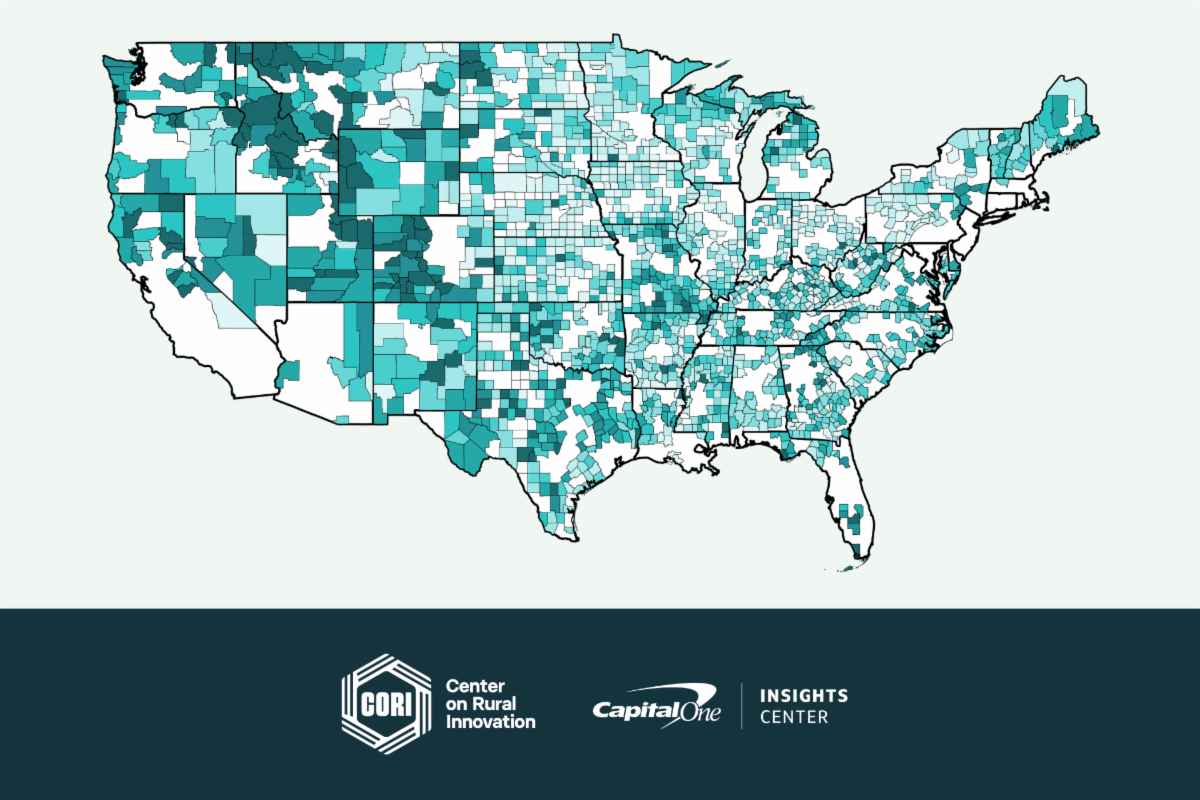
Launched the Rural Entrepreneurship Index in partnership with the Capital One Insights Center. And why we’re excited to share our new Rural Built video series.
Take a look at the Rural Entrepreneurship Index and spend time with the Rural Built stories. Together, they make a simple point: rural America shouldn’t just react to technological change — it should drive what comes next.
Entrepreneurship has always been one of rural America’s greatest strengths. And now it's measurable.
We’re proud to launch the Rural Entrepreneurship Index, a first-of-its-kind interactive map developed by the Center on Rural Innovation in partnership with the Capital One Insights Center. This powerful new tool brings together 11 key indicators of entrepreneurial activity to help communities understand their momentum, identify opportunities for growth, and make a stronger case for investment.
See where your community is on its entrepreneurial ecosystem journey.
Administration Releases FY27 President’s Budget Request
This morning, the Administration released the President’s Budget Request for Fiscal Year (FY) 2027. Overall, the proposal for the Department of Education is very similar to the FY2026 request, with calls for funding cuts, block grants, and program eliminations—all of which Congress rejected in its final FY26 spending bill. More on The Leading Edge blog.
See Which Ed. Dept. Programs Are Moving to New Agencies: A Tracker
The Trump administration is shifting large swaths of the U.S. Department of Education’s congressionally mandated portfolio to other agencies, as part of its ongoing campaign to shutter the Education Department altogether. EducationWeek has been tracking those programs.
AASA Healthcare Cost Survey
Rising healthcare premiums continue to place growing pressure on district budgets, forcing difficult choices about staffing, programming, and long-term financial planning in school systems across the country. AASA has a survey in the field to better understand how these trends are affecting school systems. Please complete the survey before it closes. Check your inbox for the link or email me directly (tthomas@aasa.org) to get access.
ED Released REAP Eligibility Spreadsheet
The FY26 REAP Eligibility Spreadsheet is now available. The SRSA application and other relevant information is sent to your district’s point of contact. Please check the spreadsheet and ensure your district’s information is up to date. Contact the REAP Team at reap@ed.gov with any changes.
More Middle and High Schoolers are Leaning on AI for Homework
A new RAND Corporation study finds that AI use among middle and high schoolers rose considerably between May and December 2025, even as more secondary students expressed concern that using the technology for homework can harm their critical thinking skills.

2024 Update: What's the Cost of Teacher Turnover? (tool)
This tool can be used to estimate the cost of teacher turnover in a school or district and can inform local conversations about how to attract, support, and retain a high-quality teacher workforce.
Where do teachers want to teach? This map rates each state on teaching attractiveness and teacher equity based on factors such as wage competitiveness and working conditions, and highlights whether states are likely to have an adequate supply of qualified teachers to fill their classrooms.
The Rural Livability Project Launches Website
What makes a community a good place to live, work, and raise a family depends on who you ask, which is why defining livability can be so challenging. Traditional approaches often rely on a narrow set of economic indicators, overlooking the many factors that shape everyday quality of life.
The Rural Livability Project,part of the Wisconsin Rural Partnerships Institute at UW–Madison, takes a broader view. By examining key dimensions such as entrepreneurship, housing, natural amenities, health, and local governance, among others, the project seeks to understand what supports livability in rural places.
The research behind the website uses diverse data, advanced methods, and comprehensive analytical frameworks to go beyond growth in uncovering the mechanisms that drive livability and make somewhere a good place to live, work, and raise a family. With this tool, communities have a way to measure success that goes beyond narrowly focusing on economic growth.
NREA Celebrates a Successful Hill Day 2026
Each year, NREA affiliates join together for Hill Day in Washington, DC, to advocate for the issues impacting rural communities. In 2026, over 20 advocates made the journey, and together we visited over 60 congressional offices to speak on rural issues.
The morning began with policy briefings from T-Mobile, the US Department of Education, the Coalition for Education Funding, the National Grange, AASA, and BASIC. Then our advocates dispersed to speak with their state representatives.
Our messaging changes each year to represent the current issues most impacting rural schools. This year, we focused on the following issues
(click any to view the full one-page summary):
“NREA Hill Day reflects the strength of rural advocacy in action. Our members showed up prepared, informed, and committed to ensuring that the needs and lived experiences of rural schools were clearly represented in conversations with congressional offices and in the national education agenda.”
NREA Partners with Barbara Sinatra Children’s Center Foundation and Fight Child Abuse to Bring Student Safety Educational Materials to Rural Schools Nationwide - National Rural Education Association
The Foundation provides no-cost programming for schools centered on child abuse prevention and awareness — content that is research-backed, age-appropriate, and ready to use. Mike Nelson is Vice President of Education and Strategic Partnerships for the Barbara Sinatra Children's Center Foundation, in partnership with Terry Theron from Wonder Media.
Feel free to forward this media information to your school counselors or School Psychologist for review. Review all media programming with your local policies. Click here to view the resources.
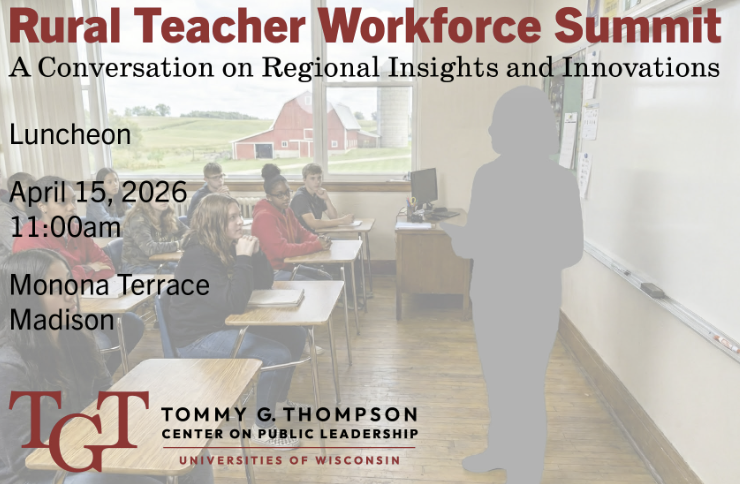
Wisconsin’s continued prosperity is intertwined with the sustainability and success of its rural communities and schools. Investing in innovative approaches to strengthening the rural educator workforce is imperative for students imagining future careers and families seeking economic opportunity. Rural schools, together with strong university partners and supportive policymakers, can shift the narrative on teaching as a profession and encourage the next generation of teachers to make a difference in rural communities across the state.
Join us for an engaging discussion with panelists from Wisconsin, Minnesota, and Illinois to learn more about effective and exciting solutions to the rural teacher shortage!
A Rural Teacher Workforce Summit on April 15 is made possible by the generous support of the Tommy Thompson Center for Public Leadership at UW-Madison. The Summit will include an overview of our first and second papers in this series as well as two specific policy areas impacting the rural educator workforce: opportunities for paid student-teaching positions in rural districts and “grow your own” educator programs. Our panel includes two current Wisconsin rural superintendents, an education policy expert from the Wisconsin Policy Forum, and education researchers from Minnesota and Illinois who will provide a regional perspective on how similar challenges are being addressed in their respective states.
This event will be held at Monona Terrace in Madison from 11am-2pm and will be recorded. The registration includes an in-person option (with lunch!) as well as a livestream option. You can register for the event here.
We encourage you to both register and circulate to colleagues within your networks who have an interest in challenges and innovative practices impacting the rural educator workforce.
Policy Intelligence and Education News




Wisconsin School Safety Coordinators Association